
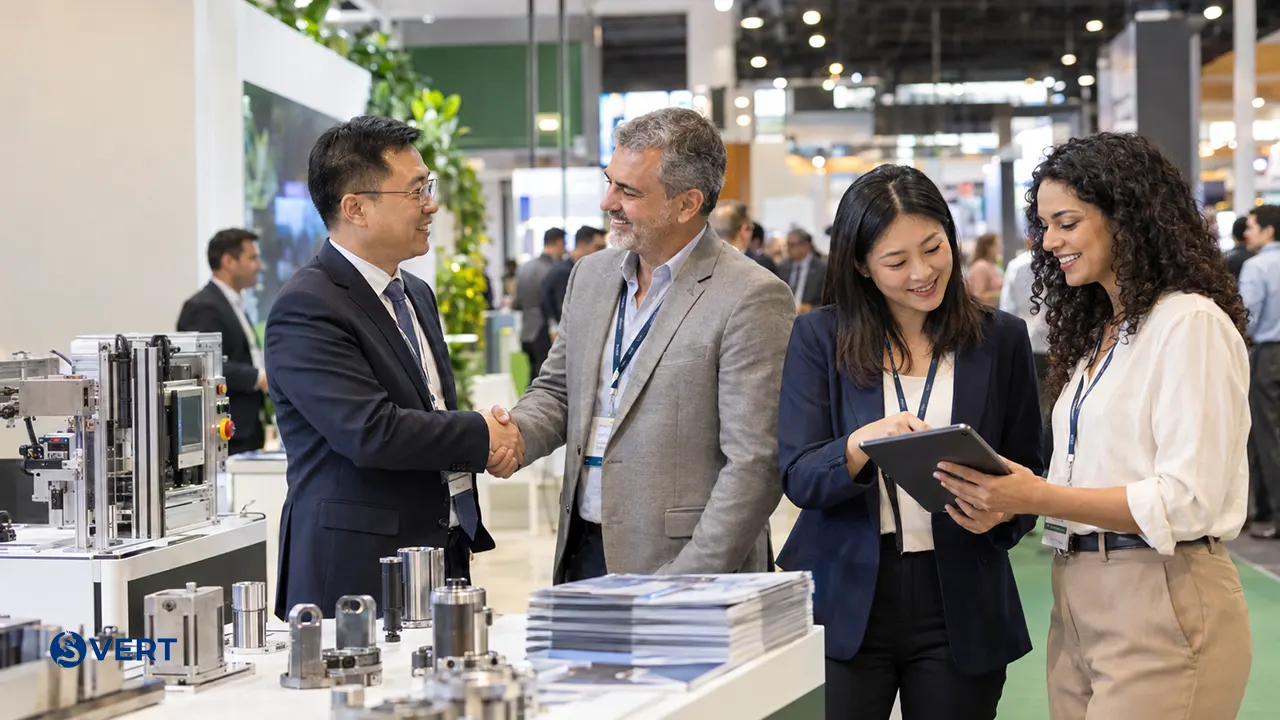
Choosing the right Brazilian B2B sales channels can determine how efficiently a Chinese manufacturer develops its presence in the market. A company may have a strong product, competitive manufacturing capabilities, and international export experience, but the route used to reach Brazilian customers still needs to match the way those customers buy.
For Chinese manufacturers, Brazil offers several possible commercial routes. These can include direct sales to companies, distributors, specialized partners, system integrators, industrial networks, trade shows, and locally managed business development. The right combination depends on the product, target industry, sales cycle, technical requirements, and level of local support required.
The important point is that a sales channel should not be selected simply because it is familiar. It should be selected because it can connect the manufacturer with the right Brazilian buyers and support the type of sales process the product requires.
For companies entering Brazil from China, understanding these channels before investing heavily in local infrastructure can make the expansion process more structured and easier to scale.
Why channel strategy matters in the Brazilian market
Brazil is a large and diverse B2B market. A manufacturer selling industrial machinery may have completely different purchasing dynamics from a company selling electronic devices, medical equipment, components, agricultural technology, or software.
The person purchasing a product may not always be the person who first discovers it. An engineering department may specify equipment, a distributor may recommend a supplier, a procurement team may negotiate the purchase, and management may approve the final agreement.
This makes channel strategy particularly important.
A manufacturer needs to understand not only who the final customer is, but also which organizations and professionals influence the purchasing process.
For some products, direct sales provide the strongest route because the manufacturer needs to communicate technical information directly to the customer. For others, a distributor with an established customer network may provide broader market access.
Some companies may benefit from a combination. A manufacturer could develop direct relationships with strategic accounts while using selected distributors to reach smaller customers or specific regions.
The objective is to create a channel structure that supports the actual buying process rather than forcing every potential customer into the same model.
Direct B2B sales to Brazilian companies
Direct B2B sales are one of the most important channels for Chinese manufacturers selling products with significant technical, commercial, or operational value.
In this model, the manufacturer works directly with Brazilian companies rather than depending entirely on an intermediary.
This can be particularly relevant for industrial equipment, machinery, automation systems, specialized components, technology, and other products where customers need detailed information before making a purchase.
The sales process can involve identifying target companies, finding the appropriate decision makers, presenting the product, understanding the customer’s requirements, responding to technical questions, preparing commercial proposals, negotiating conditions, and following the opportunity through to closing.
Direct sales can also give manufacturers a closer understanding of the Brazilian market.
The company learns which applications generate demand, what customers expect from suppliers, which product specifications matter most, and how purchasing decisions are made.
The challenge is maintaining consistent local sales activity. A manufacturer based in China may have excellent international sales capabilities but still need someone on the ground to develop Brazilian relationships, communicate with prospects, and follow opportunities through the sales cycle.
That is where local commercial execution becomes valuable.
Looking for more insights? Explore related article
China to Latin America market entry strategy
For Chinese companies looking toward Latin America in 2027, market entry should be approached as a commercial expansion project…

Distributor sales channels
Distributors can provide Chinese manufacturers with access to an established commercial network without requiring the manufacturer to develop every customer relationship independently.
A relevant distributor may already sell to the industries the manufacturer wants to reach. It may have salespeople, technical staff, customer relationships, inventory capabilities, and knowledge of the products it represents.
However, finding a distributor is not simply about finding a company that says it is interested in the product.
The distributor needs to be commercially aligned with the manufacturer’s objectives.
Questions worth considering include:
- Does the distributor already serve the intended customer segment?
- Does it have experience selling comparable products?
- Does its geographic coverage match the manufacturer’s objectives?
- Does it have the technical capability required?
- Does it have an active sales organization?
- Does it have relationships with the relevant Brazilian buyers?
- Is it prepared to invest commercial effort in developing the product?
The answers can help determine whether a distributor is a genuine sales channel or simply another contact in a database.
VERT GTM specifically works with international companies to identify and engage qualified distributors and partners, with partner selection based on the product category, target market, and commercial objectives.
System integrators and specialized partners
For technical products, system integrators can be an important route into the Brazilian B2B market.
An integrator may combine equipment, software, automation, engineering, or other technologies into a larger solution for its customer. In these situations, the manufacturer may not be selling to the ultimate end user directly. Instead, its product becomes part of a broader project.
This can be particularly relevant for automation systems, industrial equipment, infrastructure solutions, technology, and specialized components.
The commercial strategy therefore needs to identify organizations that influence projects as well as companies that ultimately purchase the equipment.
For a Chinese manufacturer, developing these relationships can create opportunities that would be difficult to discover through broad consumer focused marketing.
The manufacturer needs to understand where its product fits within the project ecosystem and which Brazilian organizations have the ability to specify, integrate, recommend, or purchase it.
VERT GTM works with industrial distributors, system integrators, EPC contractors, and direct B2B buyers in areas including manufacturing, automation, energy, and infrastructure.
Trade shows as a B2B sales channel
Trade shows can be much more than an opportunity to display products.
For manufacturers entering Brazil, industry events can provide concentrated access to companies, decision makers, distributors, engineering professionals, and potential commercial partners.
The important work, however, happens before and after the event.
Before attending, a manufacturer can identify companies it wants to meet and arrange targeted conversations. During the event, representatives can qualify contacts rather than treating every visitor as an equally valuable lead.
After the event, follow up becomes essential.
A company that collects hundreds of business cards but does not establish a structured follow up process may lose the commercial value of the event.
This is why trade show participation works best when it is integrated into the broader sales process.
VERT GTM offers trade show representation and execution, including representing international companies at industry events and helping convert event contacts into business opportunities.
For a Chinese manufacturer that cannot maintain a permanent local team, having a Brazilian commercial representative at an event can also provide continuity between the exhibition and the wider sales process.
Business development through targeted prospecting
Not every Brazilian B2B buyer is actively searching for a new international supplier.
That does not necessarily mean there is no opportunity.
In many industries, potential customers already have established purchasing processes and supplier relationships. A manufacturer may therefore need to proactively introduce its products to companies where there is a strong commercial fit.
Targeted prospecting can involve identifying companies by industry, size, location, application, production profile, or purchasing requirements and then reaching the appropriate decision makers.
The quality of the target list matters.
A manufacturer selling industrial components, for example, may be better served by identifying Brazilian manufacturers that use those components in their production than by generating a broad list of companies in the general industrial sector.
This makes lead generation more closely connected to sales development.
VERT GTM’s lead generation service focuses on identifying and engaging qualified buyers, distributors, and partners rather than simply generating large volumes of unqualified contacts.
Looking for more insights? Explore related article
From China to Brazil: building a scalable B2B sales strategy
For a Chinese company entering Brazil, building a sales operation is not simply a matter of finding customers and sending product catalogs…

The role of local commercial representation
For many Chinese manufacturers, the most practical option is not choosing between direct sales and distributors immediately. It may be establishing local commercial representation first.
A local representative can help the manufacturer develop the market while the company evaluates which sales channels produce the strongest opportunities.
This can include communicating with Brazilian prospects, presenting products, managing discussions, following up on opportunities, supporting negotiations, and maintaining relationships.
VERT GTM’s model is specifically structured around acting as the commercial arm of international companies in Brazil and Latin America. The international company remains responsible for production, final approval of deals, and delivery, while VERT GTM manages local commercial activities such as product presentation, market approach, customer communication, negotiation support, and follow up.
This structure can be particularly useful for a Chinese manufacturer that wants to start selling in Brazil without immediately creating a Brazilian subsidiary or hiring a complete local sales department.
How to choose the right Brazilian sales channel
There is no single sales channel that works for every manufacturer.
The decision should begin with the characteristics of the product.
A complex industrial machine may require technical sales and demonstrations. A standardized component may work well through distributors. A highly specialized technology solution may require direct relationships with enterprise customers and technical teams.
The sales cycle also matters.
Products purchased quickly through established procurement processes can require a different channel from products that involve months of technical evaluation and negotiation.
Geographic coverage matters as well. Brazil’s size means that a distributor with strong presence in one region may not provide the same coverage as a national network.
After sales requirements should also be considered. If a product requires installation, maintenance, spare parts, technical assistance, or ongoing service, the channel needs to have the capabilities to support customers after the initial transaction.
VERT GTM supports local product assistance and customer relationships, including coordination around maintenance, spare parts, and service structures for relevant products.
Combining multiple channels can create a stronger market presence
A Chinese manufacturer does not necessarily have to choose only one route.
A multi channel B2B strategy can allow different channels to serve different commercial purposes.
For example, a manufacturer could use direct sales to develop relationships with large strategic accounts, distributors to reach established customer networks, system integrators to access projects, and trade shows to generate new relationships.
The key is to avoid creating channel conflict.
Pricing, territories, customer ownership, lead management, and responsibilities should be defined clearly when multiple channels are involved.
The manufacturer also needs visibility into the pipeline. If several partners are approaching the same customers without coordination, opportunities can become difficult to manage.
A structured commercial operation can help maintain clarity while allowing different channels to contribute to growth.
Pricing and landed cost affect channel decisions
Sales channel decisions cannot be separated from pricing.
A manufacturer needs to understand what the product will cost when it reaches Brazil and how much margin each participant in the channel requires.
The final commercial structure may involve the manufacturer, importer, distributor, reseller, integrator, or other participants depending on the product.
VERT GTM’s market entry work includes landed cost analysis, pricing and margin strategy, channel strategy, and go to market planning designed around the Brazilian market.
This matters because a product that looks competitively priced from the factory may require a different commercial structure once import costs, distribution margins, taxes, logistics, and other market considerations are taken into account.
Understanding these economics before approaching partners helps manufacturers negotiate from a clearer position.
Building a channel that can scale
The first Brazilian sales channel does not have to be the final one.
A manufacturer may begin with direct prospecting and local representation, identify its strongest customer segments, and then develop distributors in selected markets.
Alternatively, a distributor may provide the initial entry point while the manufacturer develops relationships with larger strategic accounts.
What matters is learning from the market and improving the commercial structure as the business develops.
A scalable channel strategy should make it possible to increase the number of qualified opportunities without proportionally increasing the manufacturer’s internal workload.
This is one reason local execution can be valuable. Instead of requiring the Chinese headquarters to manage every Brazilian prospect, partner, meeting, and follow up directly, a local commercial team can coordinate those activities.
As the business grows, the manufacturer can decide whether additional investment in local personnel, inventory, technical support, or legal structure is appropriate.
Looking for more insights? Explore related article
-
How to find importers and distributors in Brazil from China
Brazil presents a strong opportunity for Chinese manufacturers, exporters, suppliers, and brands looking to expand their international business. With a large domestic market, established industrial…

-
Brazil sales opportunities for Chinese manufacturers
For Chinese manufacturers, Brazil offers more than a large consumer market. It is also a significant industrial economy with demand for machinery, components, technology, equipment,…

How VERT GTM supports Brazilian B2B sales channels
VERT GTM helps international companies, including manufacturers expanding from Asia, develop and operate their commercial presence in Brazil and Latin America. Its model combines go to market strategy with local sales execution rather than stopping at market research.
For a Chinese manufacturer evaluating Brazilian B2B sales channels, this can involve several practical activities.
VERT GTM can help define the market approach and channel strategy, identify qualified Brazilian companies, reach decision makers, present products, develop conversations, and support negotiations.
Where distributors or partners are appropriate, VERT GTM can identify and validate potential organizations based on the manufacturer’s product, target market, and commercial goals.
Where direct sales are more appropriate, the team can support prospecting and local sales execution, helping move opportunities from initial contact toward negotiation and closing.
For manufacturers participating in Brazilian industry events, VERT GTM can also provide trade show representation and help turn event contacts into commercial opportunities.
The company can continue supporting the relationship after a deal is closed through local customer communication and relevant product support, helping international companies maintain their Brazilian commercial relationships over time.
This allows a Chinese manufacturer to maintain control of production, product standards, final deal approval, and delivery while using local commercial execution to develop the Brazilian market.
You can explore VERT GTM services to see how the company supports market entry, lead generation, sales execution, deal closing, commercial representation, and trade show execution.
Turning the right channel into real sales
Choosing a Brazilian B2B sales channel is only the beginning.
A distributor does not automatically create sales. A trade show does not automatically create customers. A list of prospects does not automatically become a pipeline.
The channel needs active commercial management.
That means identifying relevant companies, reaching the right people, presenting the product clearly, understanding customer requirements, following up consistently, supporting negotiations, and moving qualified opportunities toward a commercial agreement.
For Chinese manufacturers, this is where local execution can complement the strengths already present in the company.
The manufacturer can continue focusing on production, product development, quality, and international operations while a local commercial partner develops relationships and manages the Brazilian sales process.
VERT GTM’s approach is built around this division of responsibilities. The company acts as a local commercial team, helping international manufacturers create opportunities, progress deals, close contracts, and support growth in Brazil and the wider Latin American region.
For companies deciding how to enter Brazil, the right question is not simply which sales channel is most popular. It is which channel gives the product access to the right buyers, supports the required sales process, and can develop as the company’s Brazilian business grows.
With the right structure, a Chinese manufacturer can use Brazil as a practical starting point for building a broader commercial presence in Latin America.
Learn more about VERT GTM or contact VERT GTM to discuss your product, target industry, and Brazilian market entry objectives.
Frequently Asked Questions About Brazilian B2B Sales Channels for Chinese Manufacturers
What are the main B2B sales channels for Chinese manufacturers in Brazil?
The main routes are direct sales to Brazilian companies, distributors, system integrators and specialized partners, trade shows, and targeted prospecting handled by a local commercial team. Most manufacturers combine two or more of these, depending on the product and the buyer.
Should a Chinese manufacturer sell directly or through distributors in Brazil?
It depends on the product. Direct sales suit technical or high-value products where buyers need detailed information from the manufacturer. Distributors suit products that benefit from an existing customer network, regional coverage, and local inventory. Many companies sell directly to large accounts and use distributors for smaller customers or other regions.
How do I find a reliable distributor in Brazil?
Look beyond companies that simply say they are interested. Check whether the distributor already serves your target industry, has sold similar products, covers the regions you want, has technical staff, and will actively invest sales effort in your product. A local partner can help identify and validate candidates before you sign anything.
Do I need a Brazilian subsidiary to start selling in Brazil?
Not necessarily. Many manufacturers begin with local commercial representation or an external sales team, then decide on a subsidiary, dedicated staff, or inventory once real opportunities show what the market needs.
What role do system integrators play in Brazilian B2B sales?
Integrators combine equipment, software, and engineering into larger projects for their customers. For automation systems, industrial equipment, and infrastructure products, they often decide what gets specified, so they can be an important route to projects you would not reach through general prospecting.
Are trade shows worth it for Chinese companies entering Brazil?
They can be, if the work around the event is planned. Set meetings with target companies beforehand, qualify contacts at the booth instead of treating every visitor equally, and follow up quickly afterward. Without a structured follow up, most of an event’s value is lost.
How does landed cost affect which sales channel I choose?
A price that looks competitive from the factory can change a lot once import costs, taxes, logistics, and each channel partner’s margin are added. Calculate landed cost and margins before approaching distributors or resellers, so you can negotiate from a clear position.
Can I use more than one sales channel at the same time in Brazil?
Yes. A mix of direct sales, distributors, integrators, and trade shows is common. To avoid channel conflict, define pricing, territories, customer ownership, and lead handling in writing, and keep one view of the pipeline so partners do not approach the same customers without coordination.
How can a Chinese manufacturer manage Brazilian sales without a local team?
Work with a local commercial partner that handles prospecting, product presentations, customer communication, negotiation support, and follow up in Portuguese. The manufacturer keeps control of production, final deal approval, and delivery, while the partner manages day to day sales activity in Brazil.
Ready to build your presence in LATAM?
We build and operate your sales in Brazil and Latin America, from market entry and lead generation to deal closing, with no local team to hire. Schedule a call or request a quote and we will map out your expansion plan.